SciMed
Wimshurst Machine — Static Electricity Generator with 300mm Acrylic Discs + Twin Leyden Jars
Wimshurst Machine — Static Electricity Generator with 300mm Acrylic Discs + Twin Leyden Jars
Couldn't load pickup availability
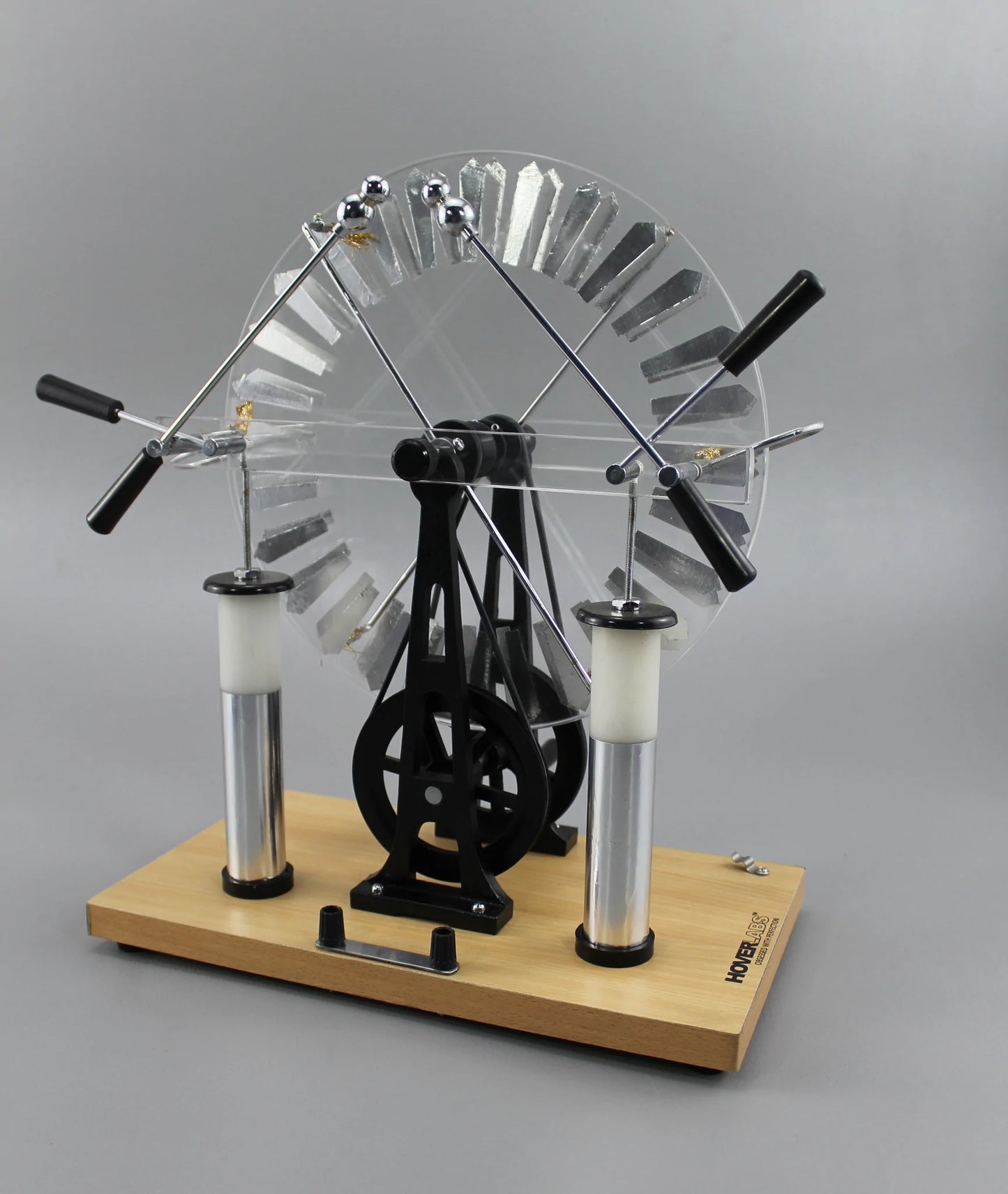
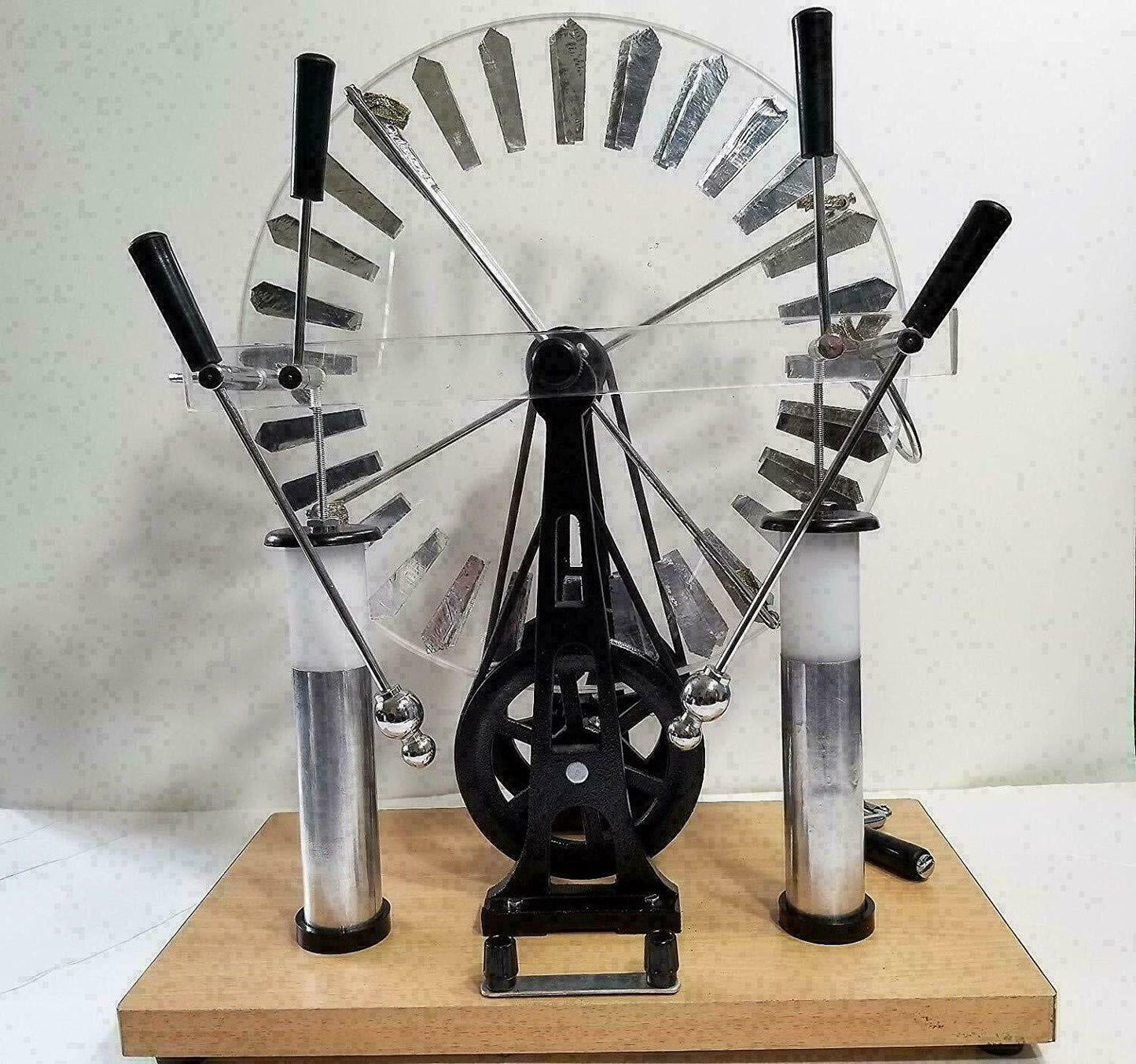
Wimshurst machine — the classic 1880s British electrostatic generator that produces high-voltage static electricity via contra-rotating disks with metal sectors. 300mm (12") clear acrylic discs (metal aluminum sectors, twin belt-driven counter-rotation), 4 metal collection brushes, twin Leyden jar condensers (Corning glass + aluminum foil), adjustable spark-gap electrode spheres. Wooden polished base. Generates 30-40 kV visible sparks across the electrode gap. Total height 16", jar height 7", base 13.5"×8"×1.1". For physics teaching, electrostatic demonstrations, science museum displays, and STEM outreach. $499 direct.
Specifications
| Type | Wimshurst electrostatic influence machine (invented 1883 by James Wimshurst) |
|---|---|
| Disc size | 300 mm (12") diameter |
| Disc material | Clear acrylic (heavy, high-resistance dielectric) |
| Sectors | Aluminum metal sectors at regular intervals |
| Drive | Belt-driven contra-rotation (twin discs rotate in opposite directions) |
| Collection brushes | 4 metal brushes, 2 per side of each disc |
| Condensers | Twin Leyden jars (Corning glass with aluminum foil coating) |
| Electrodes | Adjustable metal spheres — variable spark gap |
| Voltage output | 30-40 kV typical (depends on humidity + disc speed) |
| Spark distance | Up to ~40mm at maximum voltage |
| Base | Polished wooden base 13.5" × 8" × 1.1" |
| Overall height | 16" |
| Jar height | 7" |
| Metal wheel circumference | 4" |
| Operation | Manual hand-crank (no electrical power required) |
| Warranty | 1-year against manufacturing defects |
Teaching applications
- Electrostatics — charge generation, storage, discharge, spark visualization
- Dielectric breakdown — visible demonstration of air ionization at ~30 kV/cm
- Capacitance — Leyden jar as classic capacitor (dielectric between conductive foil layers)
- Charge conservation — positive and negative brushes collect opposite charges
- Coulomb's law — spark distance vs voltage demonstration
- Physics history — 1880s technology + engineering intuition
- Science museum interactive displays — visitor hand-cranks and sees sparks
Best for
- University + college physics teaching labs
- Secondary + junior college physics classes
- Science museums + hands-on interactive displays
- STEM outreach programs (K-12)
- Engineering + electrical engineering intro courses
- Home education / science enthusiasts
- International science education (India, LATAM, Africa, SE Asia)
- NGO STEM outreach in developing regions
Buying for a school or STEM program?
- Volume pricing on 5+ orders — university physics dept + school district builds
- Net-30 invoicing for verified schools + universities
- SAM.gov / GSA compliant procurement
- Bundle with Van de Graaff generator + Electroscope + Faraday cage for complete electrostatics teaching set
- Instructor's guide + student experiments included on request
- International DDP — STEM education growth markets
FAQ
How much voltage does it generate?
30-40 kV typical — visible sparks jump the electrode gap up to ~40mm. Voltage is limited by disc speed + humidity (dry air = higher voltage, humid air reduces output). Not dangerous like household electrical (very low current, ~microamperes), but painful shock if you touch electrodes during operation.
Do I need electricity to operate this?
No — hand-cranked. Static electricity generation is entirely mechanical: rotating discs with metal sectors past collection brushes creates charge separation. Historically used before household electricity existed. Fully off-grid demonstration equipment.
Is this safe for classroom use?
Yes with basic supervision. Very low current means shock is startling but not medically dangerous. Do not use with pacemaker patients, do not aim electrodes at electronics (charge can damage), keep flammable materials away from spark gap.
How do I demonstrate maximum spark length?
Dry room + steady fast cranking + electrode gap adjusted to just before spark stops jumping. Practice: crank steady 5-10 revolutions, then slowly widen gap until spark won't jump — that's max voltage distance. Log this as "breakdown voltage of air ≈ 30 kV/cm."
User Manual (PDF)
Download the User Manual (PDF)
Browse all manuals by category at scimedstore.com/pages/user-manuals. Need a digital or printed copy, or have a question? Email sales@scimedstore.com.
Share