SciMed
Vicat Needle Apparatus — Cement Consistency + Setting Time Tester, IS 5513 / ASTM C191
Vicat Needle Apparatus — Cement Consistency + Setting Time Tester, IS 5513 / ASTM C191
Couldn't load pickup availability
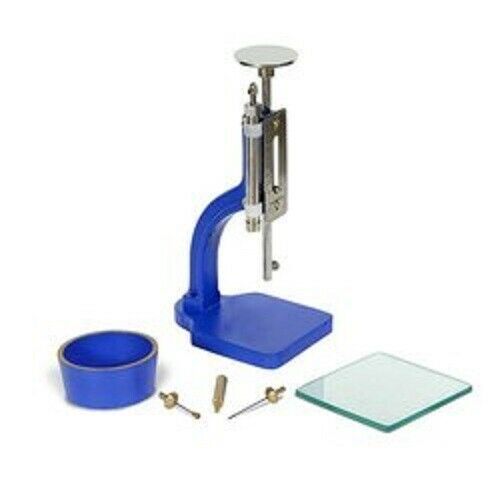
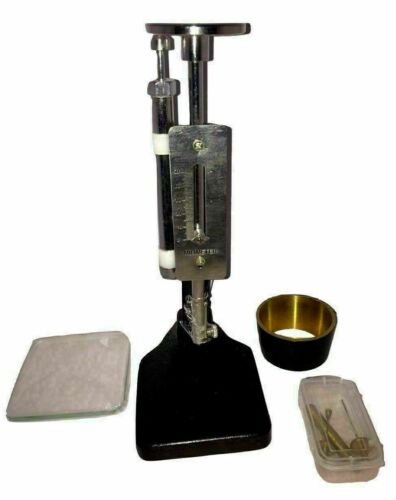
Vicat needle apparatus for determining normal consistency and initial + final setting times of cement and Class A limes, per IS 5513, ASTM C191, EN 196-3, and BS 4550. Complete unit: metallic frame with freely-moving vertical rod, dashpot for gentle needle lowering, brass Vicat mould, glass base plate, and one set of three needles — consistency plunger (10 mm diameter), initial setting needle (1 mm), and final setting annular attachment. Standard cement QC apparatus for every construction site + concrete lab globally. $700 direct.
Standard compliance
| Indian Standards | IS 5513 (Vicat apparatus specification) · IS 4031 Part 4 (cement consistency) · IS 4031 Part 5 (cement setting time) |
|---|---|
| American Standards | ASTM C187 (cement consistency) · ASTM C191 (cement setting time) |
| European Standards | EN 196-3 (cement testing methods) |
| British Standards | BS 4550 (cement methods of testing) |
| Applicable materials | Portland cement (OPC), PPC, PSC, Class A limes, plaster of Paris (with modified protocol) |
Specifications
| Frame | Metallic (cast-iron / steel) — vertical support with movable rod |
|---|---|
| Movable rod | Freely-movable, cap on top, weight 300g standard (per IS 5513) |
| Dashpot | Fitted — facilitates gentle lowering of needles (prevents impact damage) |
| Vicat mould | Brass, conical shape 70mm diameter top × 80mm diameter bottom × 40mm height (IS 5513) |
| Glass base plate | Included — smooth surface for mould placement |
| Consistency plunger | 10 mm diameter, 50 mm length (for normal consistency test) |
| Initial setting needle | 1 mm diameter, 50 mm length (for initial set determination) |
| Final setting needle | 1 mm diameter with annular attachment (5 mm outer diameter, hollowed 0.5 mm from tip) |
| Graduated scale | 0-50 mm on rod for reading needle penetration |
| Complete kit includes | Frame + rod + dashpot + Vicat mould (brass) + glass plate + 3 needles + spanner + user manual |
| Warranty | 1-year against manufacturing defects |
Test procedures
1. Normal consistency (IS 4031 Part 4 / ASTM C187):
- Weigh 400g of cement
- Add water (typically 25-35% by weight — vary between tests to find consistency)
- Mix paste, place in Vicat mould on glass plate
- Attach consistency plunger to rod, lower gently onto paste
- Normal consistency = water % at which plunger penetrates to 33-35 mm from bottom (i.e., stops 5-7 mm above bottom)
2. Initial setting time (IS 4031 Part 5 / ASTM C191):
- Prepare paste at normal consistency, place in Vicat mould
- Attach initial setting needle (1 mm)
- Every 5 minutes, lower needle onto paste — read penetration
- Initial set reached when needle stops penetrating to 5 mm from bottom (typically 30-45 min for OPC 43)
3. Final setting time (IS 4031 Part 5 / ASTM C191):
- Continue testing with the final setting annular attachment
- Every 30 min, lower onto paste — check if needle makes an impression + annular ring makes NO impression
- Final set reached when needle makes impression but ring does not (typically 8-10 hours for OPC 43)
Best for
- State DOT + PWD cement / concrete QC labs
- Ready-mix concrete plant QC labs
- Construction contractor site labs
- University civil engineering + materials science teaching labs (mandatory equipment)
- Cement manufacturer QC labs
- Third-party construction materials testing labs
- Municipal + infrastructure project QC
- International construction contractors (India, GCC, LATAM, MENA, SE Asia, Sub-Saharan Africa) via DDP
- Highway + airport + dam construction QC
Buying for a DOT, contractor, or civil engineering program?
- Volume pricing on 5+ orders — DOT multi-lab + university teaching fleets
- Net-30 invoicing for verified DOTs, contractors, universities
- SAM.gov / GSA compliant procurement — Army Corps, State DOTs, FAA
- IS / ASTM / EN documentation package included on request
- Complete cement testing lab bundle available — pair with Le Chatelier flask + soundness test apparatus + fineness sieve set
- Replacement needles ($60/set), moulds ($150), dashpots ($120) stocked
- International DDP shipping — huge infrastructure markets globally
FAQ
Does this meet IS 5513 and ASTM C191?
Yes — frame dimensions, movable rod weight (300g), Vicat mould (70/80/40 mm brass), and needle specifications (10mm plunger, 1mm initial, annular final) all comply with IS 5513 and ASTM C191. Test results are directly comparable to standard-compliant Vicat data.
Can I use this for lime testing?
Yes — Class A limes (fat lime, hydraulic lime) can be tested per IS 6932. Water content + setting time protocols differ slightly from cement; consult IS 6932 for lime-specific procedure.
What's the difference between initial and final setting time?
Initial setting = time from adding water until cement paste starts losing plasticity (typically 30-45 min for OPC 43 — you must place concrete before this). Final setting = time until paste has hardened to point where surface is finishable (typically 8-10 hours — you can start finishing operations after). Both are IS 4031 Part 5 mandatory tests.
Do I need a temperature-controlled environment?
Yes — IS 4031 requires testing at 27±2°C ambient temperature + 65% RH minimum. For summer testing in hot climates, budget an air-conditioned test room. Temperature affects setting time significantly (higher temp = faster setting).
How is this shipped?
US: ground freight (~15 kg boxed). International: DHL Express DDP or ocean freight DDP. Ships to India, LATAM, MENA, SE Asia, GCC, Sub-Saharan Africa. Import duties are buyer responsibility (contact us for DDP quote if needed).
Share