SciMed
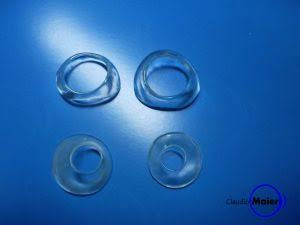
Ocular Conformer / Surgical Eye Shaper — Postoperative Socket Preservation, 3 Sizes × L/R × With + Without Holes
Ocular Conformer / Surgical Eye Shaper — Postoperative Socket Preservation, 3 Sizes × L/R × With + Without Holes
No se pudo cargar la disponibilidad de retiro
Postoperative ocular conformer (eye shaper) for socket preservation after enucleation, evisceration, or exenteration surgery — prevents eyelid adhesion, fornix retraction, and socket contracture during healing, and preserves conjunctival architecture for successful prosthetic eye fitting. Medical-grade PMMA (methyl methacrylate) shell in three sizes (Small / Medium / Large) × Left or Right eye × with or without holes. $45 direct — versus $85-$175 for OEM ocular conformers from Reform Physicians, Jardon Eye Prosthetics, or O&O Innovations. Companion product to our [Ocular Prosthetic Eye](/products/prosthetic-eye) for anophthalmic socket patients.
Variant selection
| Variant | Best for | Price |
|---|---|---|
| Small / Left | Pediatric enucleation, small adult sockets — Left eye | $45 |
| Small / Right | Pediatric enucleation, small adult sockets — Right eye | $45 |
| Medium / Left | Standard adult socket — Left eye (most-used size for adult postoperative) | $45 |
| Medium / Right | Standard adult socket — Right eye (most-used size for adult postoperative) | $45 |
| Large / Left | Larger adult sockets, expansion phase — Left eye | $45 |
| Large / Right | Larger adult sockets, expansion phase — Right eye | $45 |
Note on holes vs no-holes variants: "With holes" conformers allow drainage of postoperative fluid + reduce infection risk in the early healing period (first 2-6 weeks). "Without holes" conformers are used later in healing when socket architecture is stable + drainage is no longer needed. Practices typically stock both. Contact us for hole-variant specification on order.
Clinical use
- Postoperative day 1-3 (acute) — insert conformer at end of enucleation/evisceration surgery to hold socket space open. With-holes variant preferred for drainage.
- Week 1-6 (healing) — conformer remains in socket 24/7 (patient does not remove). Ophthalmologist checks fit + adjusts size as swelling reduces.
- Week 6-12 (mature socket) — patient transitions to progressively larger conformers as fornices expand. Prepares socket for prosthesis.
- Week 8-12 (prosthesis fitting) — ocularist fits custom prosthetic eye. Conformer is replaced by the prosthesis for daily wear.
- Long-term backup — if prosthesis is temporarily out for polishing/repair, patient inserts conformer to maintain socket space (prevents overnight fornix retraction).
Why socket preservation matters
Without a conformer, the postoperative anophthalmic socket undergoes rapid contracture: eyelid margins adhere together, upper + lower fornices retract, and conjunctival scarring creates a shallow socket unable to hold a prosthetic eye. Once contracture occurs, socket reconstruction requires surgical fornix expansion + dermal grafting — a much larger secondary procedure. A $45 conformer inserted at primary surgery + maintained through healing prevents thousands of dollars of reconstructive surgery + gives the patient a socket ready for successful prosthesis fitting.
Specifications
| Material | Medical-grade PMMA (polymethyl methacrylate) — hard biocompatible acrylic, industry-standard ocular material |
|---|---|
| Sizes | Small · Medium · Large (progressive fit as socket matures) |
| Laterality | Left + Right specific (conformer curvature matches anatomical eye position) |
| Hole options | With holes (drainage) or without holes — specify on order |
| Sterilization | Autoclave 121°C · ETO · chemical high-level disinfectant |
| Care | Clean between patients or extended wear with soap + water + soft cloth; do NOT use alcohol on PMMA (surface crazing) |
| Compatibility | Transitional product between surgery + custom prosthetic eye (SciMed Ocular Prosthetic Eye, $75) |
Best for
- Ophthalmology + oculoplastic surgeons performing enucleation, evisceration, exenteration
- Ophthalmic ORs (postoperative kit supply)
- Ocularists (custom prosthetic eye fitters)
- Eye NGO + surgical missions (Aravind, LV Prasad, Fred Hollows enucleation programs)
- Trauma centers (post-traumatic enucleation cases)
- Veterinary ophthalmology (post-enucleation in dogs, cats, horses — different sizing available on request)
- Anophthalmic patients (backup for prosthesis maintenance)
- International oculoplastic DDP procurement
Buying for an ophthalmic OR, oculoplastic practice, or eye NGO?
- Volume pricing on 5+ conformers (build a full size + laterality kit)
- Net-30 invoicing for verified surgical + academic accounts
- SAM.gov / VA compliant for federal + military ophthalmic procurement
- Bundle with SciMed Ocular Prosthetic Eye ($75) + fitting kit
- Custom sizing (extra-small pediatric, XL) available on 10+ orders
- International DDP shipping — global ophthalmic + oculoplastic procurement
FAQ
When do I use "with holes" vs "without holes"?
With holes = early postoperative period (first 2-6 weeks) to allow drainage of postoperative fluid + reduce infection risk. Without holes = later healing (6+ weeks) once socket architecture is stable + drainage no longer needed. Most ophthalmic ORs stock both variants — order 2-3 of each size × laterality.
How does this compare to Reform Physicians / Jardon conformers?
Same PMMA material, same conformer geometry, same clinical function. Reform + Jardon have longer manufacturer lineage + are US-manufactured. This SciMed variant offers same clinical utility at 25-50% of OEM pricing — ideal for volume ophthalmic ORs, eye NGO surgical missions, and international procurement.
How long does a conformer stay in the socket?
Typically 6-12 weeks postoperative — until socket has fully healed + fornices are stable enough to hold a custom prosthetic eye. Patient does NOT remove during healing (unlike prosthetic eye, which is daily-wear/nightly-remove). Ocularist replaces conformer with custom prosthesis at 8-12 week visit.
Cleaning between patients?
Autoclave 121°C standard steam sterilization (safe for PMMA up to 5 cycles), OR ETO, OR chemical high-level disinfectant (Cidex OPA / hydrogen peroxide 3%). Do NOT use alcohol on PMMA — causes surface crazing that degrades biocompatibility. Never re-use a conformer between patients without full sterilization.
Share