SciMed
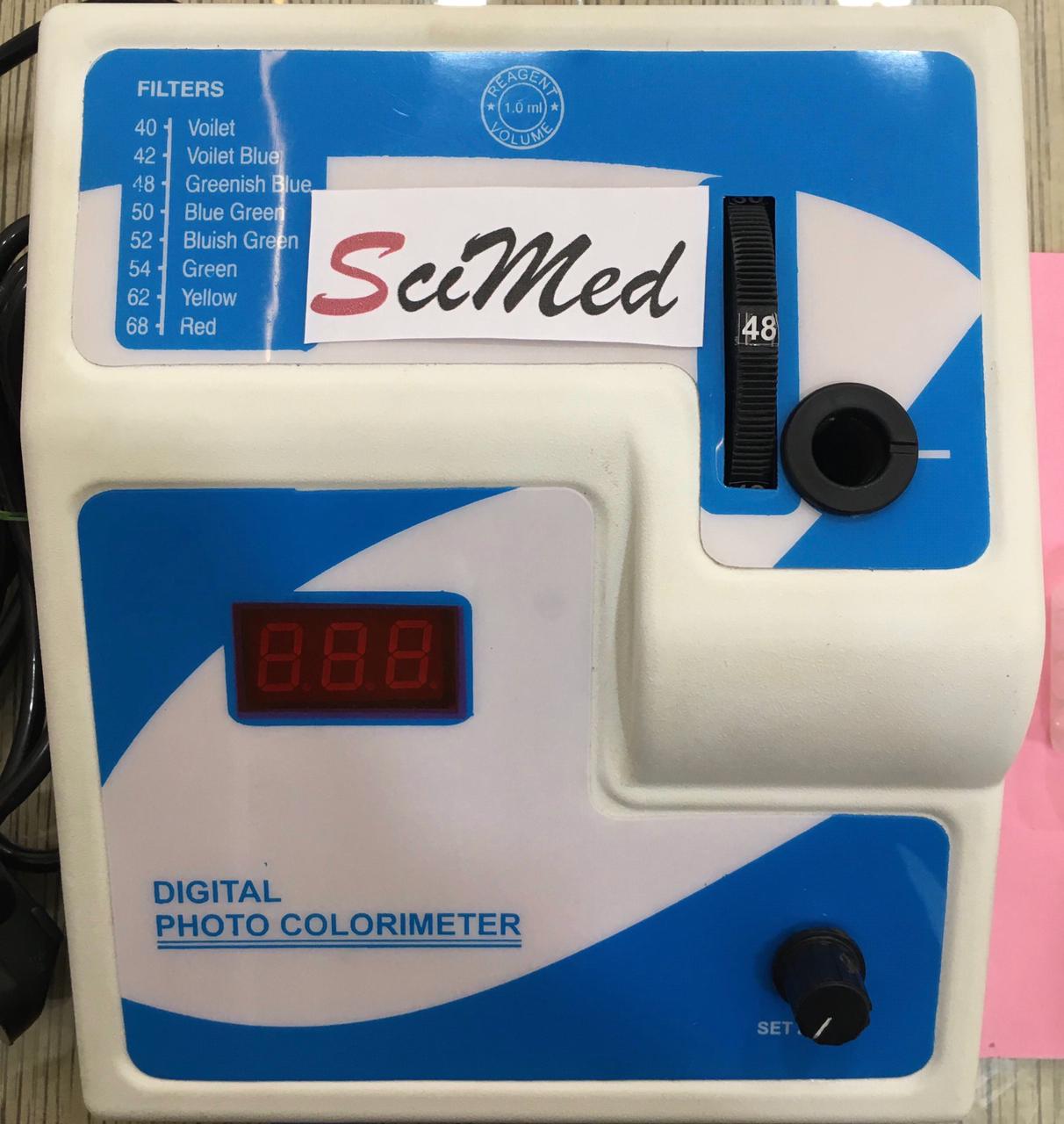
Digital Photo Colorimeter — 400-700 nm, 8 Filters (400/420/480/500/520/540/620/680), Silicon Photodiode, Clinical + Teaching Lab
Digital Photo Colorimeter — 400-700 nm, 8 Filters (400/420/480/500/520/540/620/680), Silicon Photodiode, Clinical + Teaching Lab
No se pudo cargar la disponibilidad de retiro
Digital photo colorimeter for absorbance-based quantitative analysis in clinical chemistry, water quality testing, biochemistry, and teaching labs. 400-700 nm visible spectrum coverage via 8 factory-calibrated glass filters (400 / 420 / 480 / 500 / 520 / 540 / 620 / 680 nm). Silicon photodiode detector, 2.5-digit LED display, absorbance 0-1.99 A, resolution 0.01 A. 10 mm path length matched glass tubes. Built-in voltage stabilizer (230V AC ±10%, 50 Hz). Includes 5-tube set, spare tungsten lamp, dust cover, manual. $249 direct — versus $650-$1,200 for Systronics 105 / Erma AE-11M / Elico CL 157 branded colorimeters.
Applications
- Clinical chemistry (basic) — hemoglobin (540/620 nm), glucose (505/540 nm), urea (620 nm), creatinine (520 nm), bilirubin (540/600 nm) — foundational rural / small-lab clinical chemistry
- Water quality testing — chlorine residual, iron, nitrate, phosphate, ammonia (municipal + drinking water labs)
- Environmental analysis — waste water COD, BOD, turbidity correlates
- Biochemistry teaching — Beer-Lambert law demonstration (essential undergraduate + high school biochem experiment)
- Food + beverage QC — color analysis of oils, juices, dyes
- Pharmaceutical assay — dye-content assays for coated tablets, syrup color verification
- Cosmetics + textile dye analysis — color-standard verification
- Soil + agricultural extract analysis — nutrient concentration (nitrate, phosphate)
Specifications
| Wavelength range | 400-700 nm (visible spectrum) |
|---|---|
| Filters | 8 high-standard glass filters: 400 / 420 / 480 / 500 / 520 / 540 / 620 / 680 nm |
| Photodetector | Silicon photodiode (photocell) |
| Display | 2.5-digit LED |
| Absorbance range | 0 to 1.99 A |
| Resolution | 0.01 A |
| Light source | 6.8V, 0.3A tungsten lamp (spare included) |
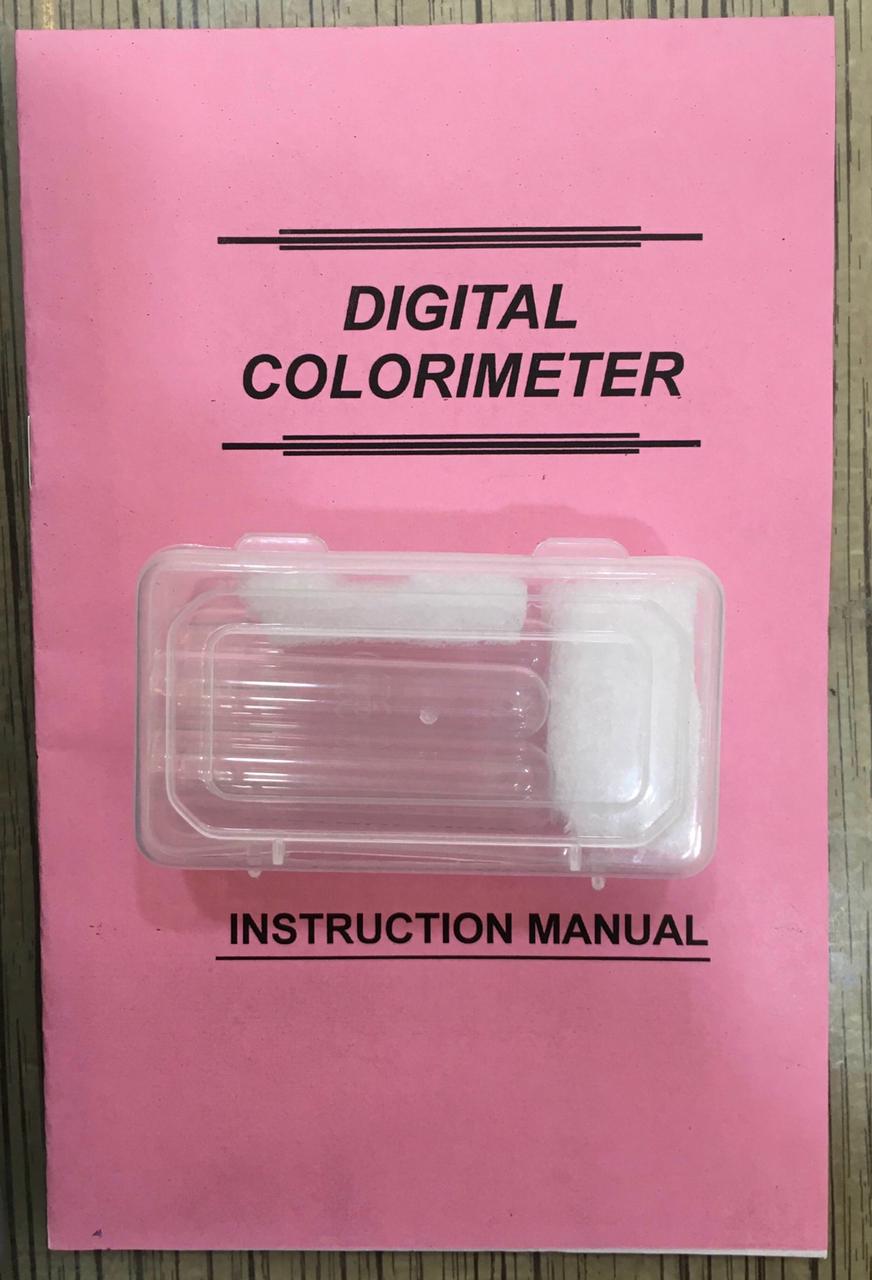
| Sample system | 10 mm path length matched glass test tubes (set of 5 included) |
| Power | 230V AC ±10%, 50 Hz — built-in voltage stabilizer for regions with unstable grid |
| Weight | 3 kg (portable bench unit) |
| Included accessories | Test tube set of 5 · spare tungsten lamp · dust cover · instruction manual |
Colorimeter vs spectrophotometer — which do I need?
Colorimeter (this instrument) = filter-based wavelength selection (8 discrete filters). Simple, robust, affordable, adequate for standard clinical chemistry + water testing + teaching where the analyte's optimal wavelength matches an available filter. Spectrophotometer = grating-based continuous wavelength selection (any wavelength 190-900 nm or wider). Required for spectral scans, unusual analytes, and precise wavelength optimization. Price differential: $249 colorimeter vs $1,500-$8,000 spectrophotometer. For 90% of clinical chemistry + water testing + undergraduate teaching, colorimeter is fully sufficient and cost-effective.
Best for
- Rural + primary care clinical chemistry labs (basic hemoglobin, glucose, urea)
- Undergraduate + high school biochemistry teaching (Beer-Lambert demonstrations)
- Municipal + drinking water quality labs
- Environmental compliance testing (waste water COD, BOD basics)
- Small pharma + nutraceutical QC (dye + color assays)
- Ayurvedic + herbal manufacturing color-standard verification
- International DDP shipping — massive rural clinical + academic markets globally
Buying for a rural clinic, teaching program, or water testing lab?
- Volume pricing on 3+ units (equip multi-lane teaching lab or municipal branch labs)
- Net-30 invoicing for verified academic + government + NGO accounts
- SAM.gov / VA compliant for federal labs
- Replacement tungsten lamps + matched tube sets stocked
- International DDP shipping — rural clinical + academic procurement globally
FAQ
Which filters do I need for hemoglobin, glucose, urea?
Hemoglobin (cyanmet method): 540 nm ✓ (included). Glucose (GOD-POD method): 505 nm — closest included is 500 nm, adequate. Urea (Berthelot method): 620 nm ✓. Creatinine (Jaffe method): 520 nm ✓. Bilirubin (van den Bergh method): 540 or 600 nm — 540 included, 600 close via 620. This 8-filter set covers the vast majority of clinical chemistry protocols.
How does this compare to Systronics 105 / Erma AE-11M?
Feature parity — same wavelength range, filter set, LED display class. Systronics + Erma have longer warranty + factory-calibration certificates. For teaching + rural clinical + water testing, SciMed delivers full function at 30-40% of premium OEM pricing.
110V US variant?
Standard is 230V. 110V variant available on request — email us before ordering if you need US-outlet plug-and-play. Or use step-up transformer (110→230V) as a permanent lab accessory.
Calibration?
Blank against distilled water (100% T / 0 A) before each session. For higher precision, run periodic potassium dichromate reference standards. Full calibration protocol in included manual.
Share