SciMed
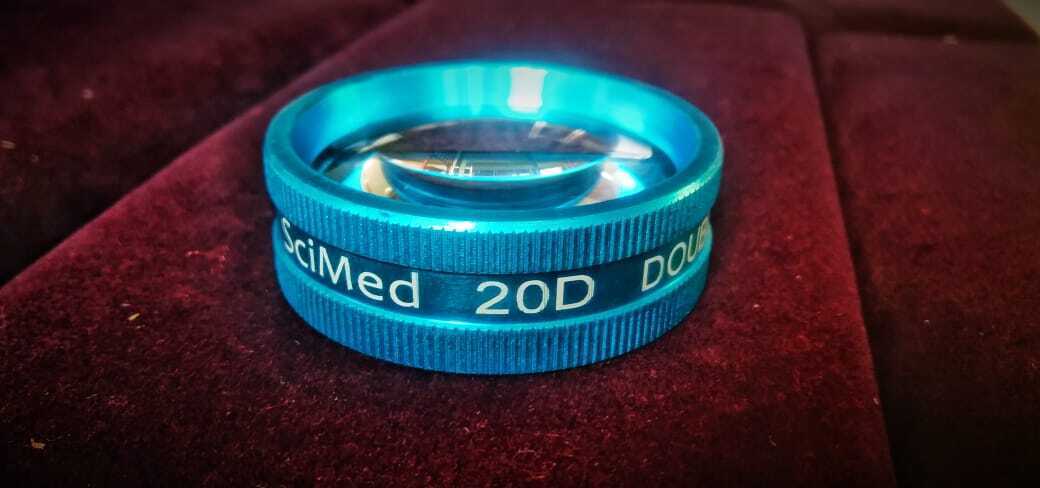
20D Double Aspheric BIO Diagnostic Lens – With Safety Case
20D Double Aspheric BIO Diagnostic Lens – With Safety Case
Couldn't load pickup availability
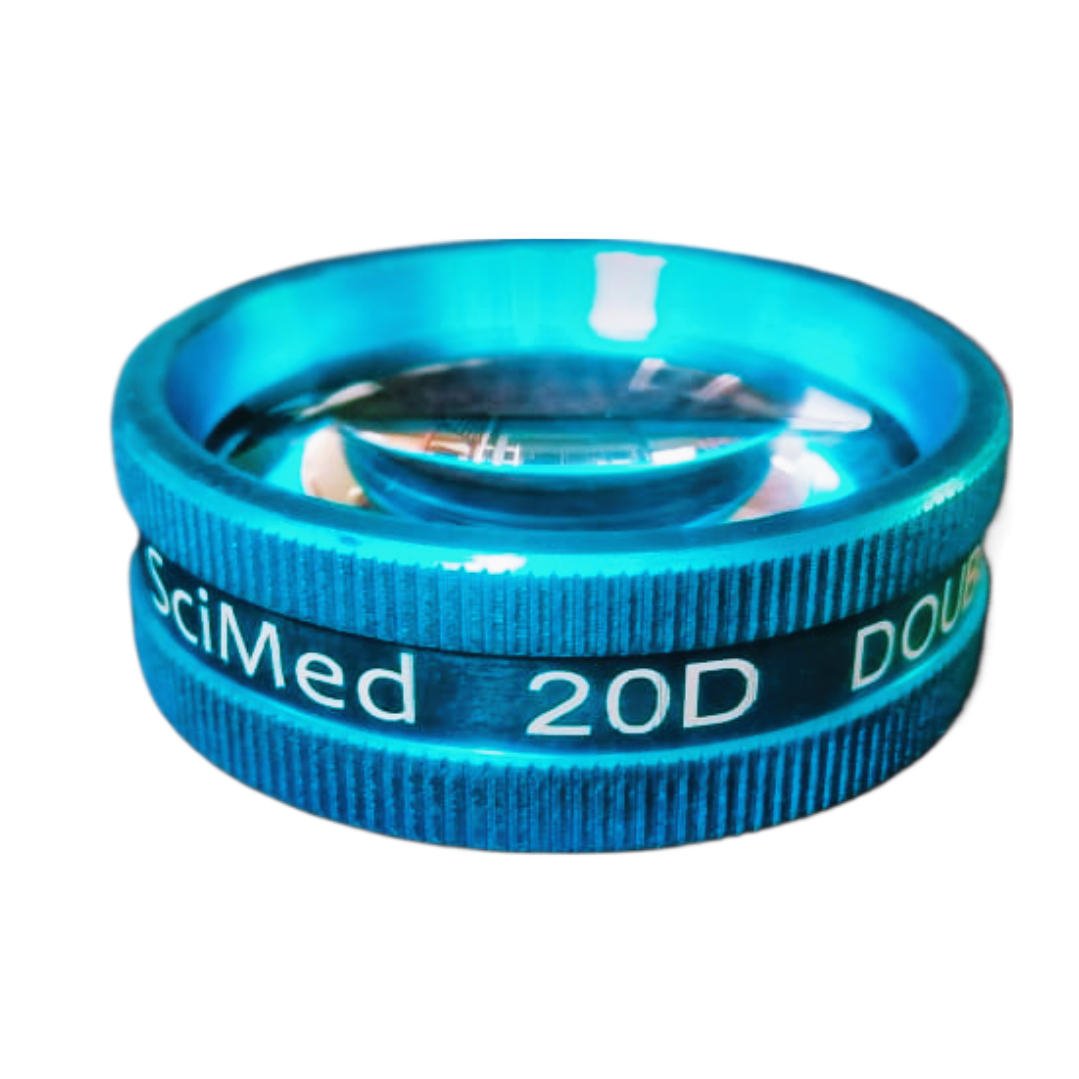
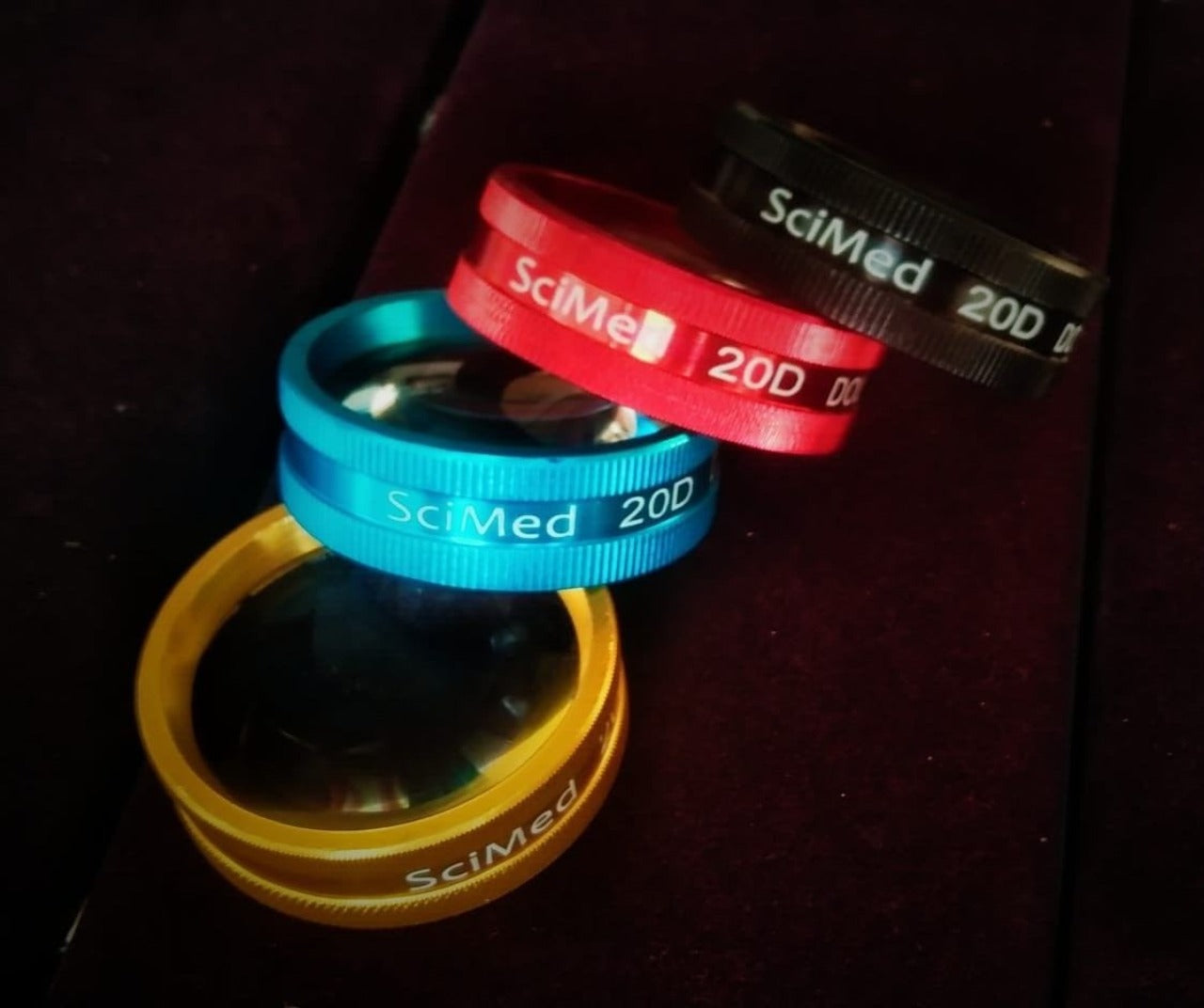
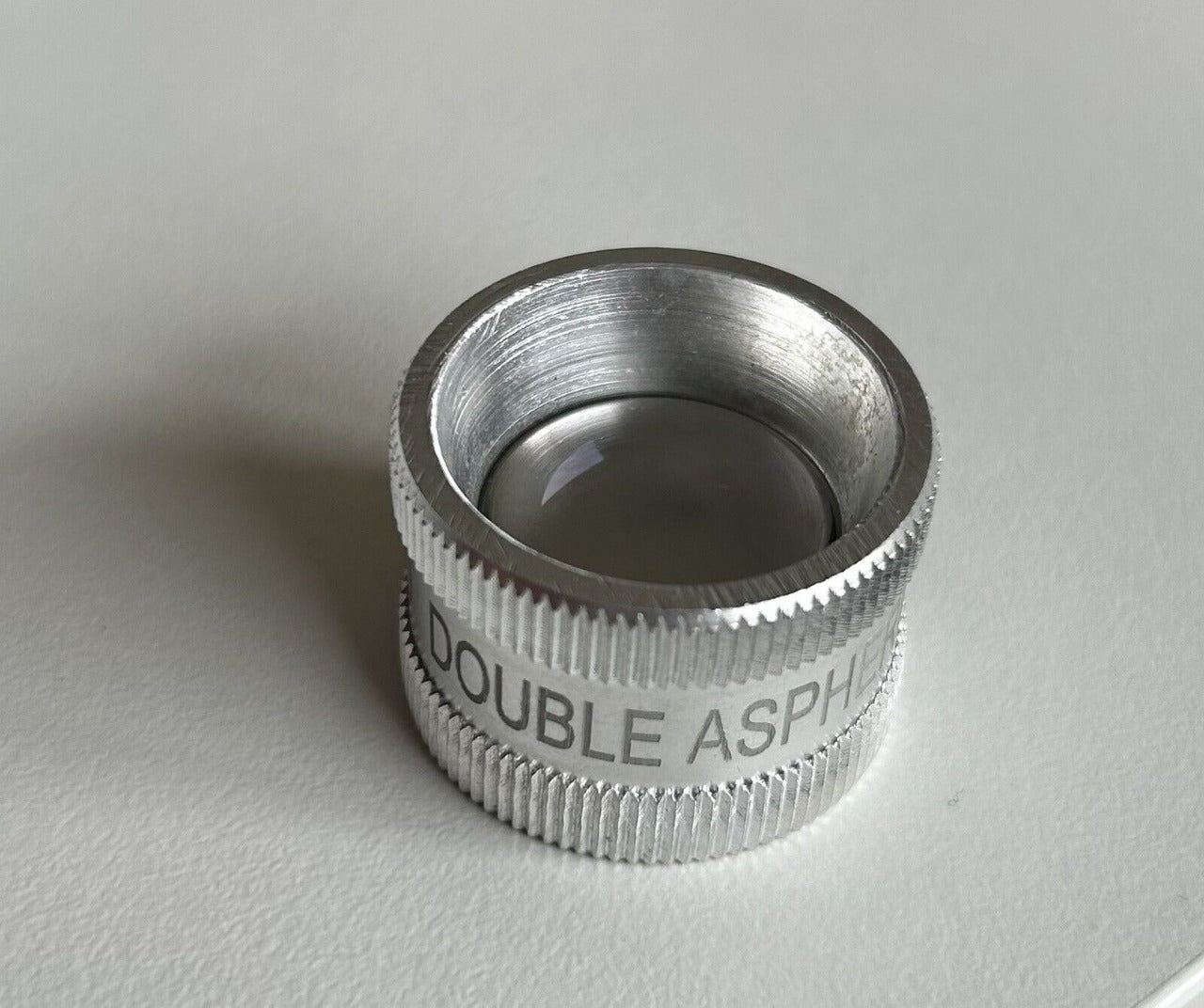
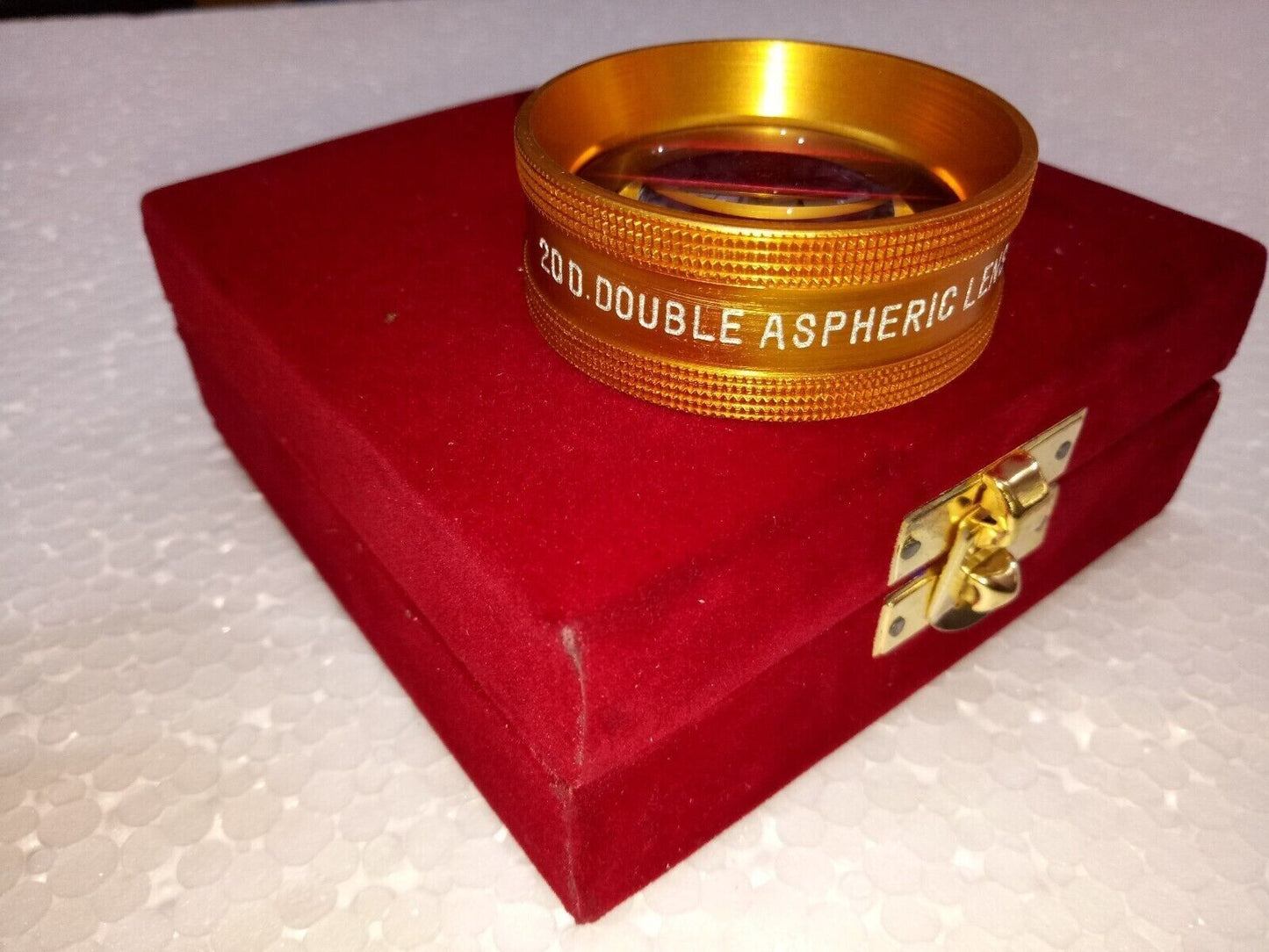
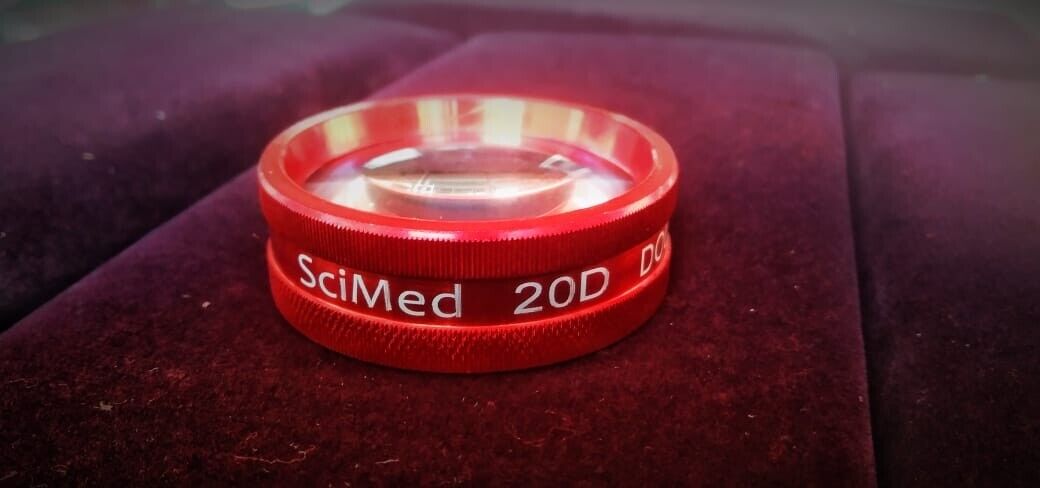
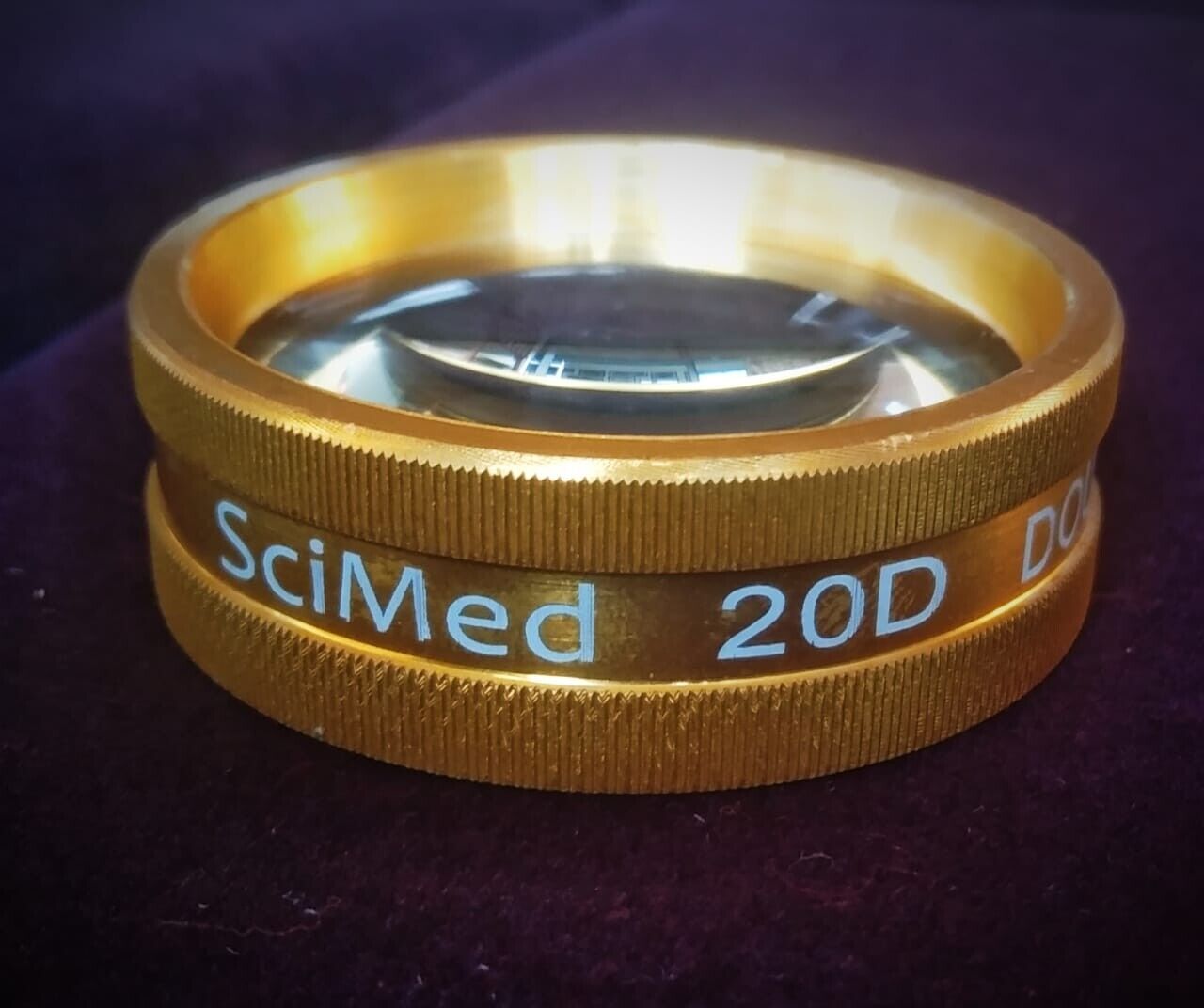
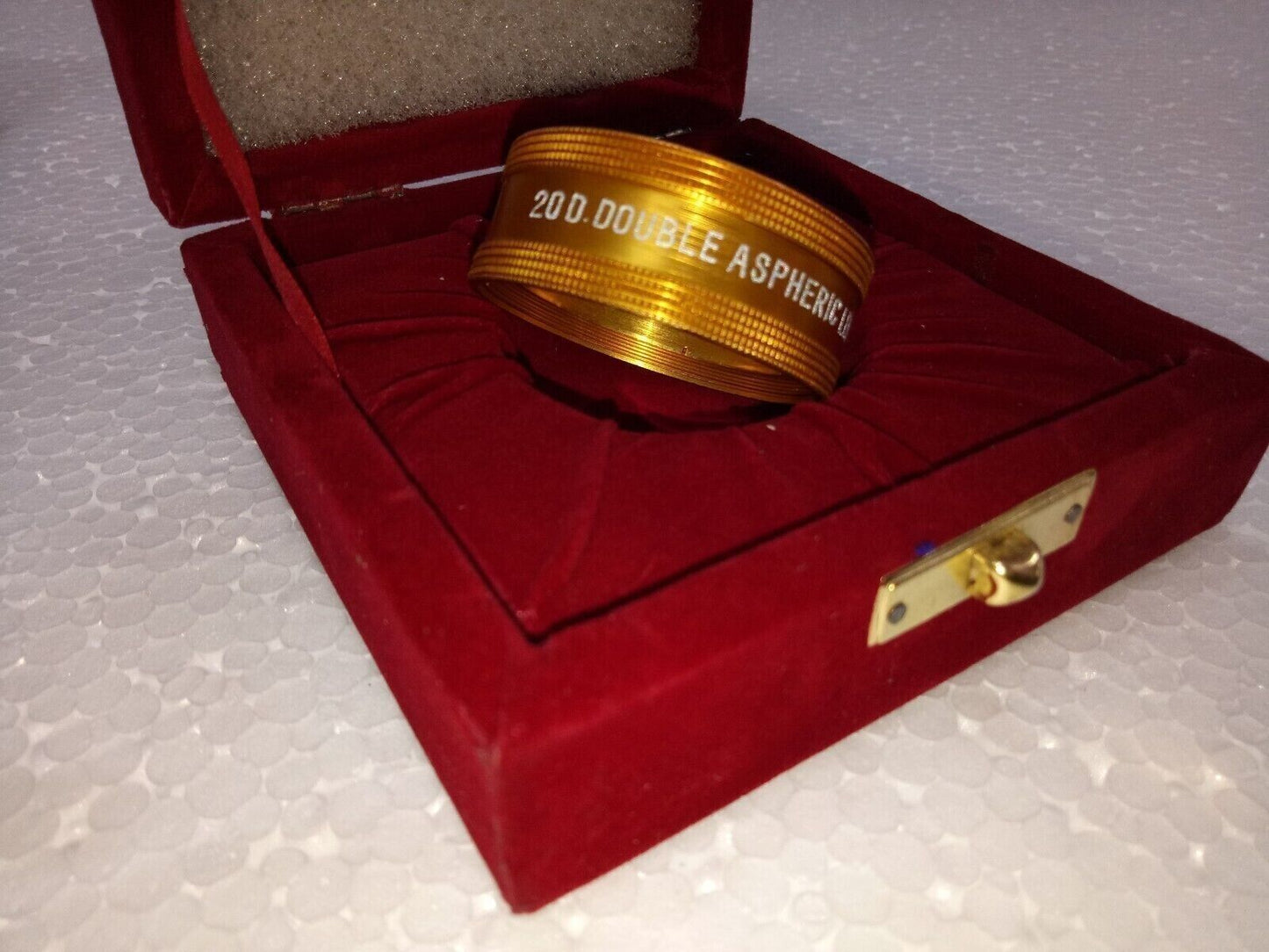
The 20D double aspheric BIO diagnostic lens is the workhorse retinal exam lens used with the binocular indirect ophthalmoscope (BIO) to view the entire retinal periphery and posterior pole in a wide-field stereoscopic image. Patented double aspheric glass optics deliver 3.13× image magnification, 46°/60° field of view, and a comfortable 50 mm working distance — well-suited to both routine clinical fundus screening and operating room use. Ships in an anti-reflection-coated matte finish with a rigid safety case.
What is a 20D BIO lens?
A 20D BIO lens (20-diopter binocular indirect ophthalmoscopy lens) is a hand-held double aspheric condensing lens used with a head-mounted BIO to project a wide-field stereoscopic real image of the fundus back to the examiner. Compared to higher-diopter lenses (28D, 30D), the 20D provides higher image magnification with a narrower field of view — making it the preferred lens for detailed exam of the optic disc, macula, and posterior pole. The 20D is the standard first-line lens for medical retina, vitreoretinal surgery, and pediatric ophthalmology.
Clinical applications
- Routine dilated fundus exam with binocular indirect ophthalmoscope
- Retinal detachment screening — wide-field peripheral view under scleral depression
- Diabetic retinopathy grading — cross-referencing macular findings with 78D/90D slit lamp findings
- Retinopathy of prematurity (ROP) screening — standard NICU screening lens
- Vitreoretinal surgery — operating room fundus visualization
- Post-scleral buckle assessment — peripheral retina inspection
- Choroidal lesion documentation and follow-up
Specifications
| Lens power | 20 diopters |
| Optical design | Patented double aspheric glass |
| Field of view | 46° static / 60° dynamic |
| Image magnification | 3.13× |
| Laser spot magnification | 0.32× |
| Working distance | 50 mm |
| Anti-reflection coating | Multi-layer AR coating on both surfaces |
| Aberration correction | Perfectly corrected for field curvature, astigmatism, spherical aberrations, and coma |
| Sterility | Wipeable with 70% isopropyl alcohol or ophthalmic disinfectant wipes |
| Case | Rigid protective safety case (included) |
| Country of origin | Manufactured to Volk-equivalent optical specification |
20D vs 28D vs 30D — how they compare
| Feature | 20D (this lens) | 28D | 30D |
|---|---|---|---|
| Field of view | 46°/60° | 53°/69° | 58°/75° |
| Image magnification | 3.13× | 2.27× | 2.15× |
| Working distance | 50 mm | 33 mm | 27 mm |
| Best for | Posterior pole, macula, disc | Pediatric ROP, general BIO | Small pupils, ROP screening |
| Typical user | Retinal specialists, general ophthalmology | NICU, pediatric | Pediatric, very small pupils |
Most ophthalmology practices carry the 20D as the primary lens, adding a 28D for pediatric ROP screening. Retinal specialists typically carry all three in their diagnostic kit.
Why buy direct from SciMed
- Genuine double aspheric optics — same design specification as premium brands at a fraction of the cost
- Anti-reflection coated both surfaces for maximum light transmission
- Rigid safety case included — no upsell for protective packaging
- Free US shipping on orders $100+ + same-day dispatch on orders before 2 PM PT
- 30-day return if optics don't meet your practice quality standard
- Clinic bulk pricing — email sales@scimedstore.com for 5+ unit orders
Frequently asked questions
What is the difference between a 20D BIO lens and a Volk 20D?
Both are 20-diopter double aspheric condensing lenses used with the binocular indirect ophthalmoscope. The SciMed 20D is manufactured to the same optical specification (double aspheric glass, AR coating, 3.13× magnification, 46°/60° FOV) but is not a Volk-branded product. Clinical performance is equivalent for standard retinal exam applications.
Is the SciMed 20D BIO lens suitable for retinopathy of prematurity (ROP) screening?
Yes, though many NICU ROP screening protocols use the higher-field 28D lens for its wider field of view (53°/69°) and shorter working distance suited to small infants. The 20D provides higher image magnification if you need to inspect a specific lesion in detail.
Can this lens be used for laser therapy?
The 20D BIO lens is designed for diagnostic use only. For BIO-based laser therapy (indirect ophthalmoscope laser delivery), a laser-rated lens with appropriate transmission characteristics is required. Contact sales@scimedstore.com if you need laser-rated lenses.
How do I clean a 20D BIO lens?
Use a lens tissue with 70% isopropyl alcohol or an ophthalmic-grade disinfectant wipe. Do not use paper towels or clothing — these can scratch the anti-reflection coating. For heavy soiling, use a mild soap solution and dry with a lens cloth.
What is the working distance for the 20D lens?
50 mm from the patient's eye. This is longer than higher-diopter lenses (28D at 33 mm, 30D at 27 mm), giving you a comfortable arm's-length exam position and reducing patient anxiety about the lens being close to their face.
Is the 20D BIO lens HSA/FSA eligible?
Diagnostic lenses purchased for professional clinical use may be reimbursed as business expenses. For personal-use HSA/FSA reimbursement, confirm eligibility with your plan administrator using the SciMed receipt.
Can I get a bulk discount for clinic or teaching hospital purchase?
Yes. Email sales@scimedstore.com for pricing on 5+ unit orders. Optometry schools and residency programs receive additional institutional pricing on training kits (typically 10+ units).
Also known as
20D lens · 20 diopter BIO lens · 20D BIO diagnostic lens · 20D indirect ophthalmoscopy lens · 20D fundus lens · 20D double aspheric lens · 20D non-contact retinal lens · Volk 20D alternative
Compare with related retinal exam lenses: 28D lens · 78D lens · 90D lens · 20D + 78D + 90D combo pack
Share