SciMed
Van de Graaff Generator, Manual or Motorised, Physics Teaching Set
Van de Graaff Generator, Manual or Motorised, Physics Teaching Set
Couldn't load pickup availability
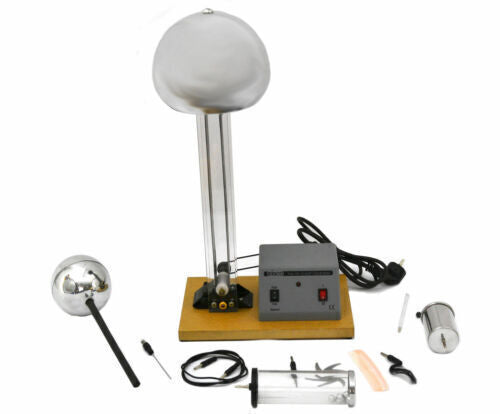
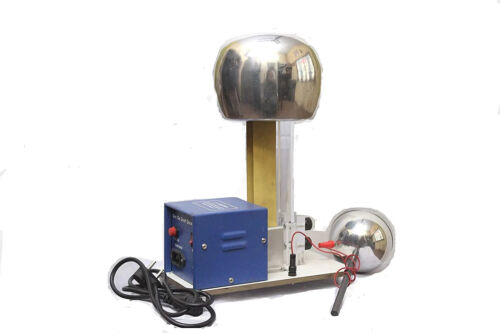
Van De Graaff electrostatic generator for physics teaching demonstrations of high-voltage electrostatics, corona discharge, ionization, and hair-standing-on-end classroom effects. Rubber belt driven by motor (or hand crank in manual variant) transfers charge via metallic combs to a polished metal dome. Perspex insulating column between base and dome for high-voltage isolation. Complete accessory set included, artificial hair-of-head brush, Faraday pail, neon bulb, transparent-plastic vibrating ion column, spare belt. 3 variants: Manual $249.99 · Motorised $349.99 · Superior Model $449.99. The essential high-school and university physics demonstration for electrostatics.
Variant Selection
| Variant | Drive | Best For | Price |
|---|---|---|---|
| Manual Type | Hand crank | Off-grid demos, low-budget teaching labs, portable demonstrations, physics fairs (student cranks and observes charge buildup, great learning kinesthetic) | $249.99 |
| Motorised | Electric motor | Standard classroom demonstration, consistent charge delivery, hands-free operation while lecturing about the physics | $349.99 |
| Superior Model | Electric motor, upgraded dome and higher voltage | University physics teaching labs, science museum and planetarium demos, advanced high school AP physics with dramatic sparking demonstrations | $449.99 |
What It Teaches
- Electrostatic charge accumulation: belt transfers charge from ground brush to dome, dome voltage rises to 100-400 kV (depending on variant and humidity)
- Faraday cage / Faraday's ice pail experiment: included Faraday pail shows charge distributes on outer surface only
- Corona discharge and sparks: spark from dome to grounded discharge sphere (2-8 inch spark length in dry conditions)
- Ionization: neon bulb glows when brought near charged dome (visible ionization)
- Hair standing on end: classic classroom demo: student stands on insulating stool, touches dome, hair rises as each strand carries same charge (mutual repulsion)
- Repulsive electrostatic force: Aluminum ball pith balls float upward, artificial hair brush strands separate
- Grounding and discharge safety: teaches safe handling of high-voltage electrostatic charge
Included Accessory Set
- Artificial hair brush (fits in 4mm socket on top of dome), for classic "hair standing on end" effect
- Faraday pail (charge-distribution demo)
- Neon bulb (ionization visualization)
- Vibrating ion column in transparent plastic container (ion motion visualization)
- Spare rubber belt (extends operational life, belts wear and eventually crack)
Applications
- High school and AP physics teaching: the definitive electrostatics demonstration (universal in physics curriculum)
- University physics teaching labs: undergraduate electromagnetism intro courses
- Science museums and planetariums: public engagement and hands-on physics exhibits
- Science fairs and open houses: dramatic demonstration draws crowds
- Homeschool and STEM enrichment: physics engagement for teenagers
- Physics teacher training programs: future science teachers learn demonstration technique
- Research on electrostatics and high-voltage devices: basic research tool
Best For
- Middle and high school physics teachers (essential classroom demo tool)
- University introductory physics labs (E&M fundamentals)
- Science museum and planetarium educators
- Homeschool physics curriculum
- Physics teacher training programs
- International school and academic physics procurement via DDP
Buying for a School District, Physics Department, or Science Museum?
- Volume pricing on 3+ generators (equip multi-school district or physics dept)
- Net-30 invoicing for verified academic accounts
- SAM.gov compliant for federal and academic procurement
- Replacement rubber belts stocked ($15/belt bulk)
- Bundle with electrostatics accessory kits, electroscope and Wimshurst machine (SciMed physics teaching series)
- International DDP shipping, global science education procurement
FAQ
Manual vs Motorised: which for classroom?
Motorised is the standard classroom teaching choice, teacher can lecture while charge builds, no hand-cranking fatigue, consistent charge delivery. Manual is great for physics fairs and kinesthetic learning (student cranks, sees output) or off-grid and portable demos. Superior model is for university, museum use where dramatic longer sparks and higher voltage matter.
How dangerous is it?
Voltage is high (100-400 kV) but current is very LOW (microamps), the classic "high voltage, low current" scenario. Standard electrostatic-generator safety: don't touch operating dome directly, discharge before touching for maintenance, no pacemaker/implant patients near active generator, ground the discharge sphere before touching. Physics teachers have safely used Van De Graaff generators for decades in classrooms.
Why doesn't it work in humid conditions?
Humidity conducts charge, moisture in air lets accumulated charge leak off the dome. Best performance in dry conditions (winter heating season indoors, or arid climate). If demo fails, run a dehumidifier for 30 min prior, or wait for a dry day. This is normal Van De Graaff behavior, not a defect.
Belt lifespan?
Rubber belts wear and crack with use, typically 200-500 hours of operation before replacement. Spare belt included with every unit. Replacement belts ~$15 stocked. Wipe belt with talc and isopropyl alcohol occasionally to maintain grip.
User Manual (PDF)
Download the User Manual (PDF)
Browse all manuals by category at scimedstore.com/pages/user-manuals. Need a digital or printed copy, or have a question? Email sales@scimedstore.com.
Share