SciMed
Vicat Needle Apparatus, Cement Consistency and Setting Time, ASTM C191
Vicat Needle Apparatus, Cement Consistency and Setting Time, ASTM C191
Couldn't load pickup availability
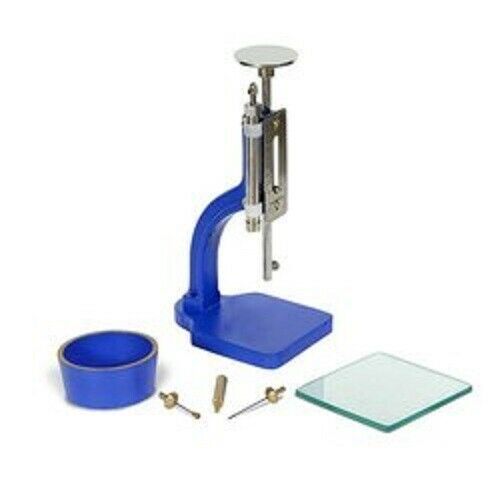
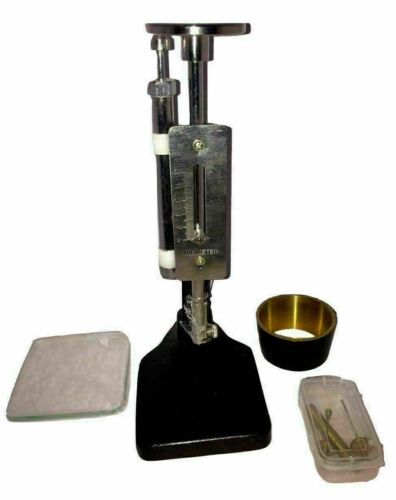
Vicat needle apparatus for determining normal consistency and initial and final setting times of cement and Class A limes, per IS 5513, ASTM C191, EN 196-3, and BS 4550. Complete unit: metallic frame with freely-moving vertical rod, dashpot for gentle needle lowering, brass Vicat mold, glass base plate, and one set of three needles, consistency plunger (10 mm diameter), initial setting needle (1 mm), and final setting annular attachment. Standard cement QC apparatus for every construction site and concrete lab globally. $700 direct.
Standard Compliance
| Indian Standards | IS 5513 (Vicat apparatus specification) · IS 4031 Part 4 (cement consistency) · IS 4031 Part 5 (cement setting time) |
|---|---|
| American Standards | ASTM C187 (cement consistency) · ASTM C191 (cement setting time) |
| European Standards | EN 196-3 (cement testing methods) |
| British Standards | BS 4550 (cement methods of testing) |
| Applicable Materials | Portland cement (OPC), PPC, PSC, Class A limes, plaster of Paris (with modified protocol) |
Specifications
| Frame | Metallic (cast-iron / steel), vertical support with movable rod |
|---|---|
| Movable Rod | Freely-movable, cap on top, weight 300g standard (per IS 5513) |
| Dashpot | Fitted, facilitates gentle lowering of needles (prevents impact damage) |
| Vicat Mold | Brass, conical shape 70mm diameter top × 80mm diameter bottom × 40mm height (IS 5513) |
| Glass Base Plate | Included, smooth surface for mold placement |
| Consistency Plunger | 10 mm diameter, 50 mm length (for normal consistency test) |
| Initial Setting Needle | 1 mm diameter, 50 mm length (for initial set determination) |
| Final Setting Needle | 1 mm diameter with annular attachment (5 mm outer diameter, hollowed 0.5 mm from tip) |
| Graduated Scale | 0-50 mm on rod for reading needle penetration |
| Complete Kit Includes | Frame, rod, dashpot and Vicat mold (brass), glass plate, 3 needles, spanner and user manual |
| Warranty | 1-year against manufacturing defects |
Test Procedures
1. Normal consistency (IS 4031 Part 4 / ASTM C187):
- Weigh 400g of cement
- Add water (typically 25-35% by weight, vary between tests to find consistency)
- Mix paste, place in Vicat mold on glass plate
- Attach consistency plunger to rod, lower gently onto paste
- Normal consistency = water % at which plunger penetrates to 33-35 mm from bottom (i.e. stops 5-7 mm above bottom)
2. Initial setting time (IS 4031 Part 5 / ASTM C191):
- Prepare paste at normal consistency, place in Vicat mold
- Attach initial setting needle (1 mm)
- Every 5 minutes, lower needle onto paste, read penetration
- Initial set reached when needle stops penetrating to 5 mm from bottom (typically 30-45 min for OPC 43)
3. Final setting time (IS 4031 Part 5 / ASTM C191):
- Continue testing with the final setting annular attachment
- Every 30 min, lower onto paste, check if needle makes an impression and annular ring makes NO impression
- Final set reached when needle makes impression but ring does not (typically 8-10 hours for OPC 43)
Best For
- State DOT and PWD cement / concrete QC labs
- Ready-mix concrete plant QC labs
- Construction contractor site labs
- University civil engineering and materials science teaching labs (mandatory equipment)
- Cement manufacturer QC labs
- Third-party construction materials testing labs
- Municipal and infrastructure project QC
- International construction contractors (India, GCC, LATAM, MENA, SE Asia, Sub-Saharan Africa) via DDP
- Highway, airport and dam construction QC
Buying for a DOT, Contractor, or Civil Engineering Program?
- Volume pricing on 5+ orders, DOT multi-lab and university teaching fleets
- Net-30 invoicing for verified DOTs, contractors, universities
- SAM.gov / GSA compliant procurement, Army Corps, State DOTs, FAA
- IS / ASTM / EN documentation package included on request
- Complete cement testing lab bundle available, pair with Le Chatelier flask, soundness test apparatus and fineness sieve set
- Replacement needles ($60/set), molds ($150), dashpots ($120) stocked
- International DDP shipping, huge infrastructure markets globally
FAQ
Does this meet IS 5513 and ASTM C191?
Yes, frame dimensions, movable rod weight (300g), Vicat mold (70/80/40 mm brass), and needle specifications (10mm plunger, 1mm initial, annular final) all comply with IS 5513 and ASTM C191. Test results are directly comparable to standard-compliant Vicat data.
Can I use this for lime testing?
Yes, Class A limes (fat lime, hydraulic lime) can be tested per IS 6932. Water content and setting time protocols differ slightly from cement; consult IS 6932 for lime-specific procedure.
What's the difference between initial and final setting time?
Initial setting = time from adding water until cement paste starts losing plasticity (typically 30-45 min for OPC 43, you must place concrete before this). Final setting = time until paste has hardened to point where surface is finishable (typically 8-10 hours, you can start finishing operations after). Both are IS 4031 Part 5 mandatory tests.
Do I need a temperature-controlled environment?
Yes, IS 4031 requires testing at 27±2°C ambient temperature and 65% RH minimum. For summer testing in hot climates, budget an air-conditioned test room. Temperature affects setting time significantly (higher temp = faster setting).
How is this shipped?
US: ground freight (~15 kg boxed). International: DHL Express DDP or ocean freight DDP. Ships to India, LATAM, MENA, SE Asia, GCC, Sub-Saharan Africa. Import duties are buyer responsibility (contact us for DDP quote if needed).
User Manual (PDF)
Download the Operating Manual (PDF)
Browse all manuals by category at scimedstore.com/pages/user-manuals. Need a digital or printed copy, or have a question? Email sales@scimedstore.com.
Share